
 April 14, 2026
 7 min read
If you grew up gardening somewhere with real winter, the rhythm of the year was simple: spring was a thaw, summer was the payoff, fall was the wind-down, winter was the death zone. You started planning in March because the ground was finally workable and you had a narrow window before the heat.
Here in downtown San Jose, it's different. Our "winter" is a rainy season. Our ground is workable all year. Our window isn't bounded by frost — it's bounded by heat. And the real planting urgency isn't "hurry before the last freeze" — it's "hurry before June hits and you're watering twice a day just to keep things alive."
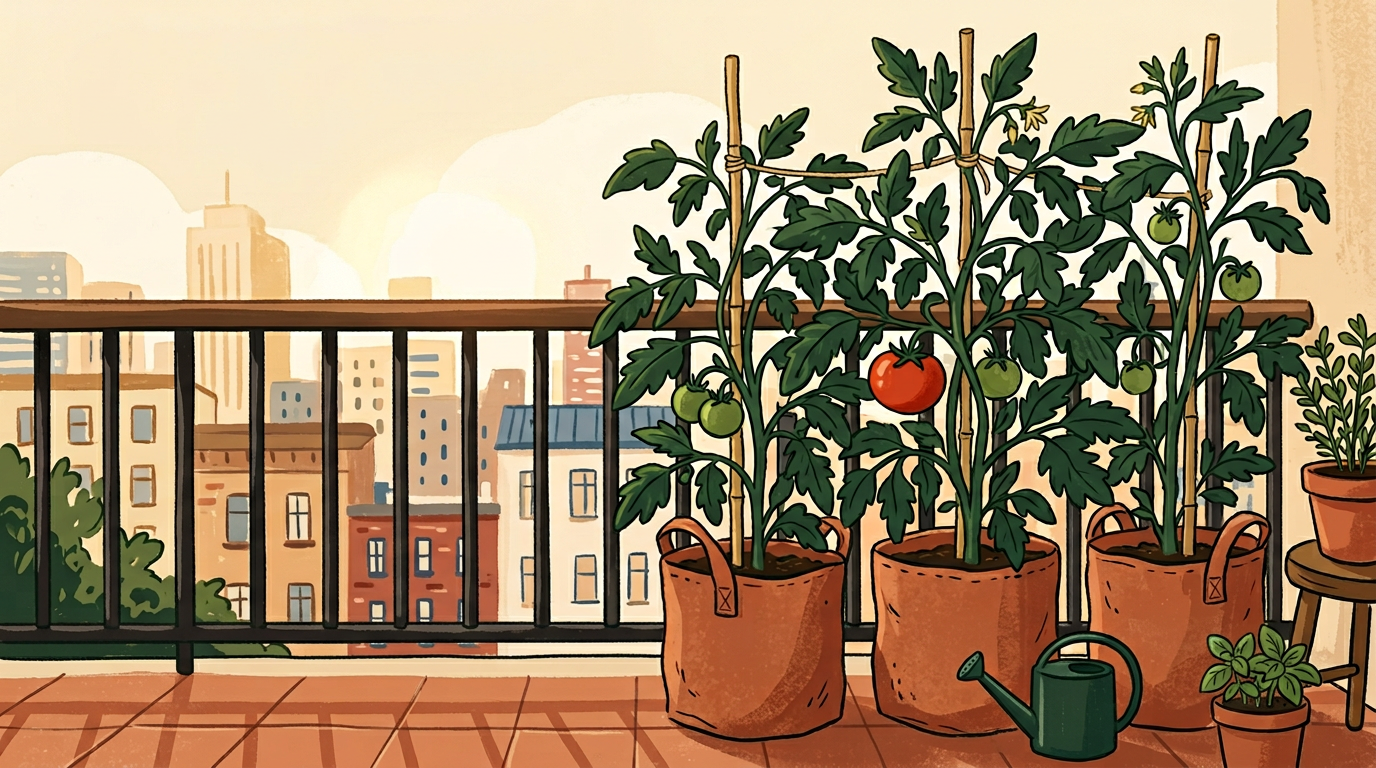
So spring prep here is less about recovery and more about readiness. Here's what I do on my balcony every April — mid-way up a downtown high-rise, on a triangle of concrete with a southwest exposure that bakes by mid-afternoon — and what I'd suggest you do on yours.
1. Do a Real Post-Rain Inspection
The rainy season is the quiet killer for container plants in California. Not because of the cold — most things overwinter outside just fine here — but because of standing water, persistent damp, and fungal issues that creep in when you're not watching.
Walk every pot. Look for:
- Cracked terracotta. Even without a hard freeze, temperature swings and soaked walls can split an unglazed pot. I've had one go mid-winter every year I've been up here.
- Soggy soil that never dried. If a pot still feels heavy and wet two weeks after the last rain, the drainage is probably compromised. Roots may be rotted underneath.
- Algae or moss on pot surfaces. Harmless in small amounts, but a signal that the pot was sitting in too much moisture too long.
- Plants that look fine but aren't pushing new growth. By mid-April almost everything outdoors should be waking up. Anything still dormant deserves a closer look at the roots.
2. Refresh Your Potting Mix (Don't Just Top It Off)
After a wet winter, the top inch or two of most container mixes is compacted, depleted, and possibly harboring fungal spores. Topping off with fresh mix buries the problem instead of fixing it.
What I actually do:
- Scrape off the top two inches of old mix and compost it (or toss it if there were any disease issues).
- Loosen the next inch down gently with a hand fork without disturbing the root ball.
- Add fresh potting mix with a handful of slow-release organic fertilizer worked in.
- Water thoroughly and let it drain completely before doing anything else.
For plants you're keeping in the same pot another year, this is enough. For plants that look root-bound or have been in the same pot 18+ months, this is the time to actually repot them — size up gradually and use fresh mix entirely.
3. Check Your Watering System Before You Need It
In the Bay Area, the transition from "hand-water once a week" to "everything is screaming for water every single morning" happens faster than people expect. Usually sometime between the last heavy rain in late March and the first 85-degree day, which could be late April or could be early June. You don't want to be figuring out a new irrigation setup the first time you come home to wilted plants.
Whatever your system is — drip with a timer, self-watering planters, hand-watering with a cheap watering can — do a dry run now:
- Replace batteries in any battery-powered timers. They always die when you need them most.
- Flush drip lines. Winter sediment clogs emitters. Run water through for ten minutes before you trust it.
- Test self-watering reservoirs. Wick material degrades. A reservoir that worked last summer might not be drawing water up to the plant anymore.
- Stock up on saucers. When the heat hits, you'll be watering until it drains out the bottom, and you do not want that draining onto your downstairs neighbor's balcony.
The single best investment I made my first summer up here was a $30 battery-powered drip timer. Not because my plants needed it — because I needed it. High-rise wind dries pots faster than any ground-level garden.
4. Plan the Summer Crop Now (Not in June)
Our growing season is long — much longer than most of the country. Tomatoes, peppers, basil, squash, cucumbers — all of those can go in the ground (or pot) in April and produce through October.
But nurseries are flush with starts in April and get picked over fast. The varieties actually bred for containers — Patio Princess tomatoes, Bushsteak, compact peppers — sell out first. If you wait until Memorial Day to shop, you'll be stuck with whatever full-size indeterminate varieties are left over, and those don't belong on a balcony.
Container-appropriate starts to grab in April
- Determinate tomatoes (Patio Princess, Bushsteak, Tumbling Tom)
- Compact peppers (Patio Baby eggplant, Lunchbox peppers)
- Basil — any variety. It does beautifully in containers here.
- Pole beans if you can rig a trellis against a railing
- Dwarf cucumber varieties
- Herbs: parsley, cilantro (will bolt fast once it's hot — plant succession), chives, oregano
5. Account for the Wind
This one gets skipped because it doesn't feel seasonal, but it becomes seasonal the moment summer hits. The Bay's afternoon breeze picks up in April and stays with us through September. On a high-rise balcony, that wind is a moisture-stealing, pot-toppling, plant-stressing reality every afternoon.
Before summer:
- Stake or cage anything vertical now, even if it doesn't need support yet. Retrofitting a cage around a top-heavy plant in July is miserable.
- Move lightweight pots to sheltered corners. Terracotta saucers act as small anchors; fabric grow bags sitting on bare concrete will slide.
- Group plants together. A cluster of three pots creates its own microclimate. A single pot exposed on a corner railing will dry out twice as fast as the same pot in the middle of a group.
6. Set Realistic Expectations
Some plants didn't make it through the rainy season. Some pots are going to need replacing. Some of what you grew last year won't work this year because you've learned your light and wind patterns better. That's fine.
Spring prep isn't about making the balcony perfect. It's about giving yourself a running start before summer tests everything. If you spend a Saturday morning this month inspecting pots, refreshing soil, checking your irrigation, and picking up a few starts at the nursery, you'll have bought yourself a whole season of easier mornings.
And then you can sit down with coffee and actually enjoy the thing you built.