 By Mister G
 April 13, 2026
 12 min read
 Updated for 2026 season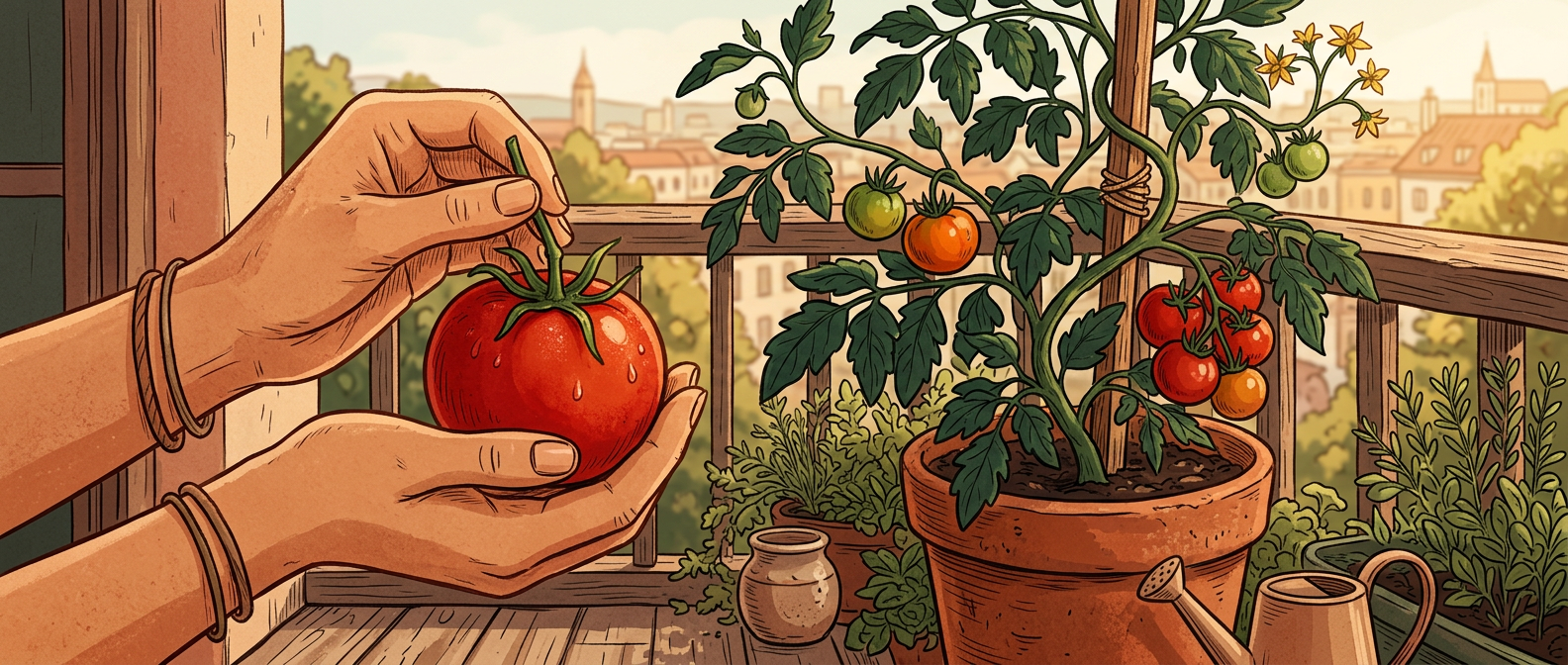
I'll be upfront: I grow over 200 plants in my high-rise apartment, but tomatoes on the balcony? That was a first for me last season. The good news is that everything I learned — from research, from trial and error, and from years of growing in tight spaces — is in this guide. You don't need a backyard. You need sun, the right container, and a willingness to water more than you think.
Why Balcony Tomatoes Work
Tomatoes are heat-loving, sun-chasing plants, and a south-facing balcony is often the warmest microclimate your building has. The reflected heat from walls and railings? That's actually a feature, not a bug. Your balcony can be a surprisingly good tomato environment — sometimes better than a shaded backyard.
What makes balcony growing work is understanding the trade-offs. You get incredible warmth and sun exposure, but you also deal with wind, limited soil volume, and the reality that containers dry out fast. The key is working with those conditions instead of fighting them — which is exactly what this guide is about.
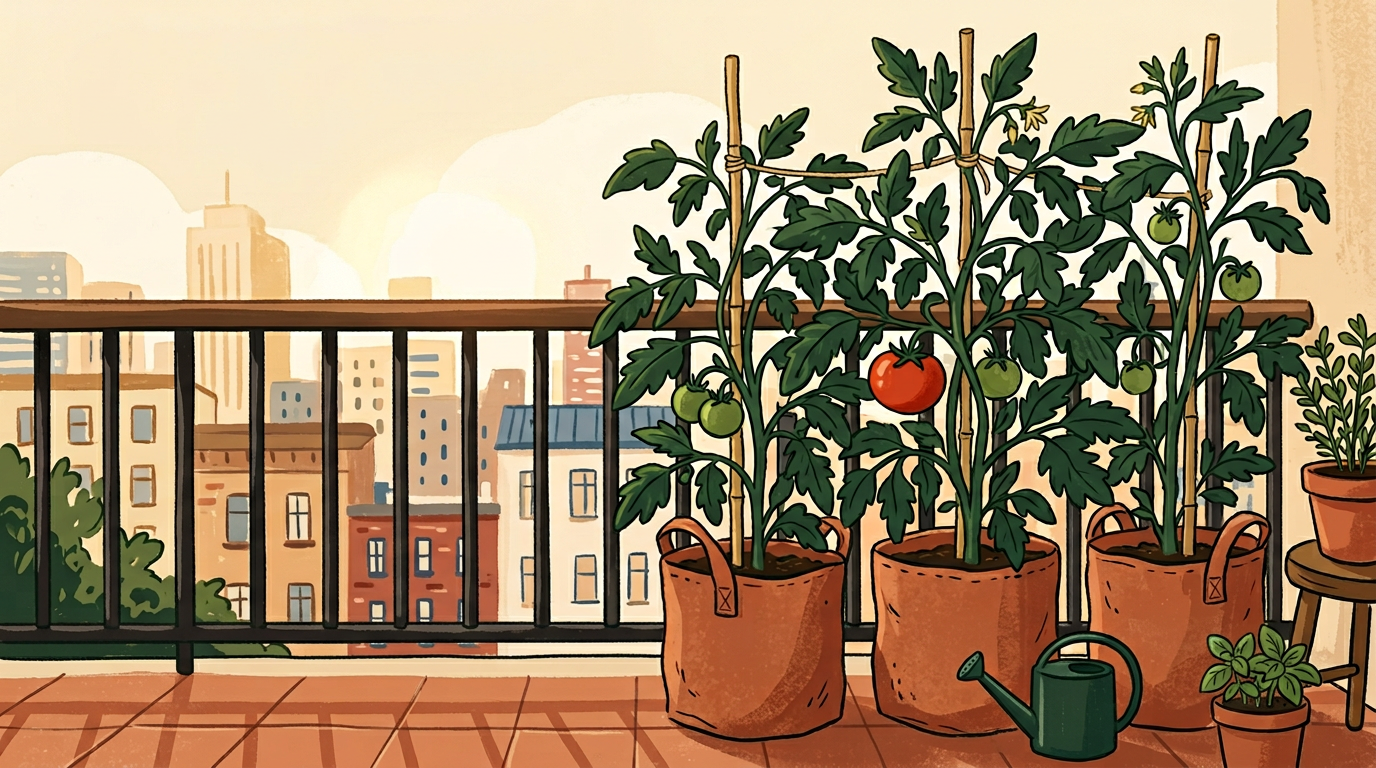
My first balcony tomato season (2025): I ran three plants — two determinates and a cherry — in fabric bags along my south-facing railing. The cherry went wild by July. The determinates were slower but gave me actual sandwich-sized tomatoes. Biggest lesson? I underestimated how much wind dries out containers up on the 14th floor. By August I was watering twice a day.
Choosing the Right Varieties
Not every tomato belongs on a balcony. You want compact plants with strong yields — think determinate (bush) types that stay contained rather than indeterminate vines that want to take over your neighbor's balcony too.
Best Varieties for Containers
| Variety | Type | Container Size | Days to Harvest | Notes |
|---|---|---|---|---|
| Patio Princess | Determinate | 5 gallon | 65-70 | Bred specifically for containers. A top pick. |
| Tumbling Tom | Determinate | 3-5 gallon | 70 | Great in hanging baskets. |
| Bushsteak | Determinate | 5-7 gallon | 65 | Full-sized fruit on a compact plant. |
| Sweet Million | Indeterminate | 7+ gallon | 60-65 | Cherry type. Needs staking. Worth it. |
| Window Box Roma | Determinate | 3 gallon | 70 | Paste tomato for really tight spaces. |

If you only have room for one plant, go with Patio Princess or Bushsteak. You'll get real-sized tomatoes from a single 5-gallon container. If you have room for two or three, mix one slicer with one cherry variety.
Picking the Right Container
Container choice matters more than most guides tell you. Too small, and your tomato will be root-bound and thirsty by July. Too heavy, and you're risking your balcony's weight limit (yes, that's a real thing to check).
Size Rules
- Minimum 5 gallons for most varieties — this is non-negotiable
- 7+ gallons for indeterminate types or if you want less frequent watering
- 3 gallons only for specifically compact varieties like Window Box Roma
Material Comparison
- Fabric grow bags: Lightweight, excellent drainage, air-prunes roots. My top pick for balconies.
- Plastic pots: Cheap, retain moisture well. Drill extra drainage holes.
- Terracotta: Beautiful but heavy and dries out fast. Better for herbs.
- Self-watering planters: Great if you travel. The reservoir helps with the balcony's drying wind.
A 7-gallon pot with wet soil and a full tomato plant can weigh 50+ pounds. Three of those plus your furniture adds up. Most balconies can handle it, but if you're on an older building, check with management. Fabric bags are the lightest option.
Soil & Feeding
Don't use garden soil in containers — it compacts, drains poorly, and can harbor diseases. You want a good-quality potting mix as your base.
The Container Mix That Works
Start with quality potting mix
Any reputable brand works. I like ones that already have perlite mixed in for drainage. Fill the container to about 2 inches below the rim.
Add slow-release fertilizer
Mix in an organic granular fertilizer (like tomato-tone) at planting time. This gives your plant a steady baseline of nutrients for the first 6-8 weeks.
Start liquid feeding at flowering
Once you see flowers, switch to a liquid fertilizer every 10-14 days. Look for something higher in phosphorus (the middle number) to support fruit production.
Mulch the top
A 1-inch layer of straw or shredded leaves on top of the soil reduces evaporation dramatically. On a windy balcony, this is the difference between watering once and twice a day.

For a full breakdown of container substrate chemistry — pH, cation exchange, and aeration ratios — check out the substrate guides on Petruscio Farms. That's where I nerd out on the science. Here, we keep it practical.
Sun & Water
Tomatoes want 6-8 hours of direct sun. Most south- or west-facing balconies deliver this easily from May through September. If you're in a shadier spot, stick to cherry tomatoes — they're more forgiving.
Watering on a Balcony
This is where balcony growing gets real. Wind, reflected heat, and limited soil volume mean containers dry out fast — much faster than I expected my first season. In peak summer, plan on watering every single morning, and sometimes again in the evening if you're on a higher floor with more wind exposure.
- Morning watering is best — gives plants a full day of moisture
- Water until it drains through the bottom. Saucers underneath catch the runoff
- Stick your finger in the soil — if the top inch is dry, water. If it's moist, wait
- Consistent watering prevents blossom end rot — the most common balcony tomato problem
Common Problems (& Fixes)
Blossom End Rot
Those black, leathery spots on the bottom of your tomato? That's calcium deficiency caused by inconsistent watering. The fix isn't adding calcium — it's watering more evenly. Mulch helps enormously.
Leggy, Sparse Growth
Not enough sun. If you're getting less than 6 hours, the plant stretches toward light instead of producing fruit. Consider a different spot or a more shade-tolerant variety.
Flowers But No Fruit
If temperatures consistently exceed 90°F (32°C), tomato pollen becomes unviable. On a hot balcony, afternoon shade from a small umbrella or sheet can actually help during heat waves. You can also gently shake the plants to assist pollination.
Harvesting & Enjoying
The best part. Pick tomatoes when they're fully colored and give slightly when pressed. Don't wait for them to be perfect on the vine — picking at the "breaker" stage (just turning color) and ripening on a windowsill is actually what commercial growers do, and it works great.
Nothing in the world tastes like a tomato you grew yourself, several stories above the street, in a fabric bag on a railing. Nothing from any grocery store comes close.